



Guide — How to choose the right moisture sensor?
- 2 February 2026
- Posted by: Emelyne CHEVALIER--SEURE
- Categories: Concrete industry, Guide
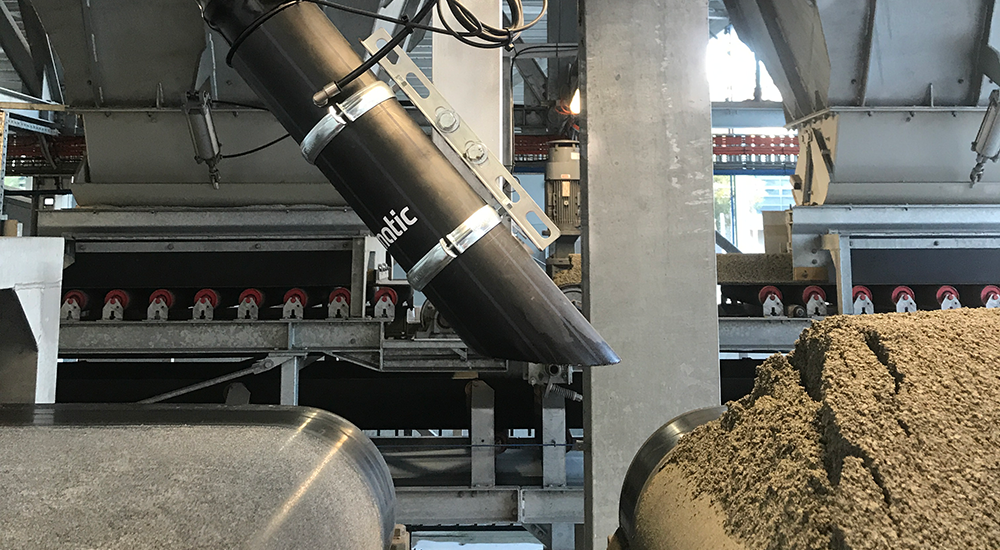
Measuring the moisture content of aggregates directly influences the water dosage and, consequently, the consistency of the mix. Choosing the right probe requires a structured assessment of the constraints: materials (fine/coarse), abrasiveness, dust, frequency, automation, maintenance, quality requirements.
POLARMOIST™ comparison highlights two types of probes: contact probes (direct contact measurement) and non-contact probes (infrared measurement).
Clarify your usage needs before making any comparisons
A methodical approach will help you choose the right equipment for your plant. We can help you see more clearly by asking you questions that will help you assess your needs. Here are six questions that will provide you with solutions:
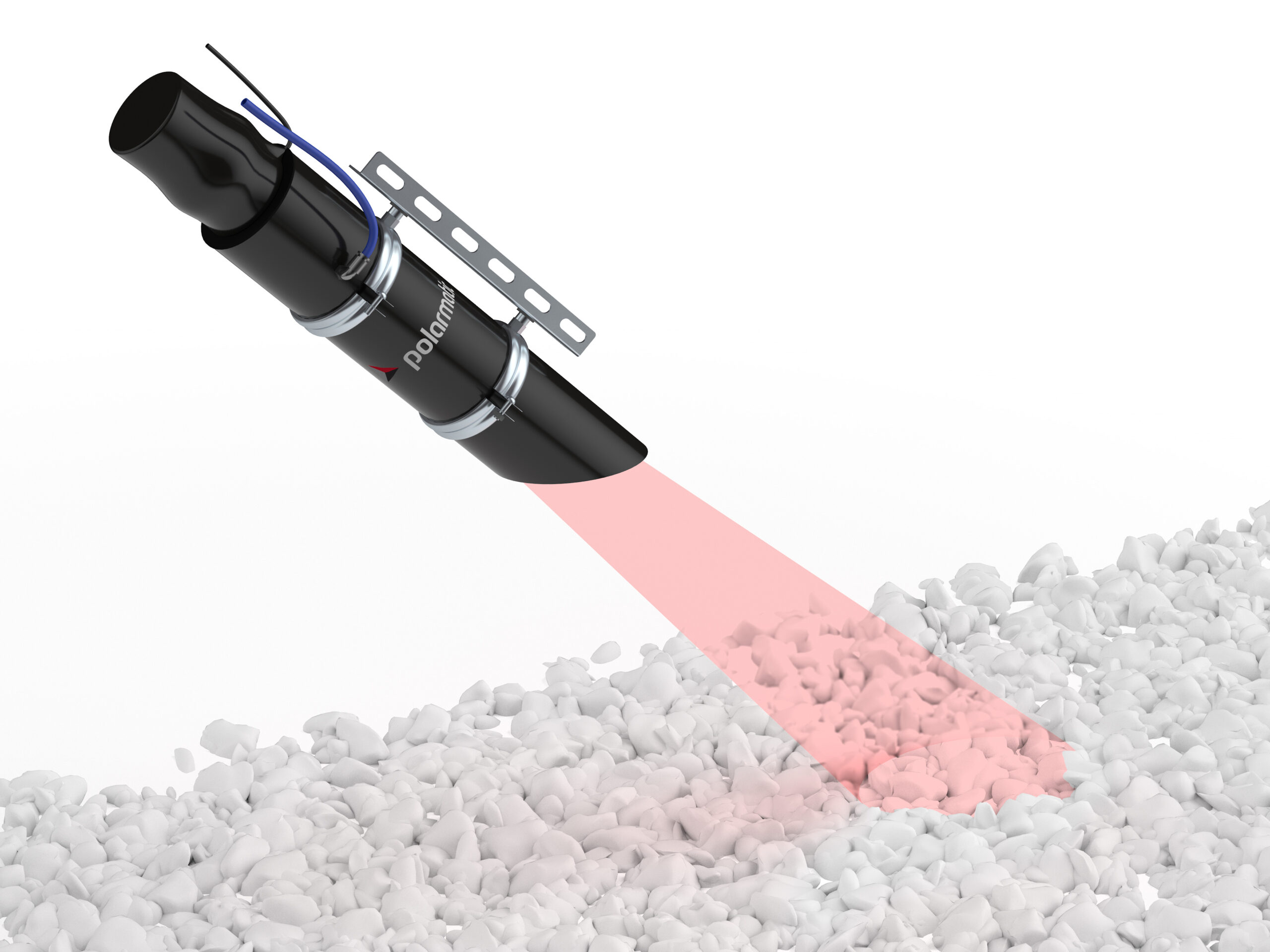
- Where to measure? Above a hopper, on a chute, on a belt, under the mixer outlet (for control), etc.
- What materials? Fine aggregates, coarse aggregates, mixtures, abrasive aggregates, dusty environments.
- What level of accuracy is required? (And what process tolerance?)
- What is the production rate? Instantaneous/continuous measurement vs. delayed measurement
- What internal maintenance model? Maintenance team available, access, acceptable downtime
- What automation integration? PC, PLC, SCADA, control centre, type of outputs
The core of the choice: contact vs. non-contact (infrared)
Contact measurement: points to consider
Contact probes are often associated with:
- Mechanical wear due to friction from aggregates,
- Greater fouling requiring regular checks,
- More frequent maintenance (cleaning, recalibration, replacement parts),
- Manual calibration, with tests, on a weekly basis.
This type of probe may remain relevant in certain contexts if the initial cost must be low. But in reality, the decision matrix must include long-term operational costs (downtime, parts, drifts). The decision depends on whether or not the long-term ROI meets your objectives.
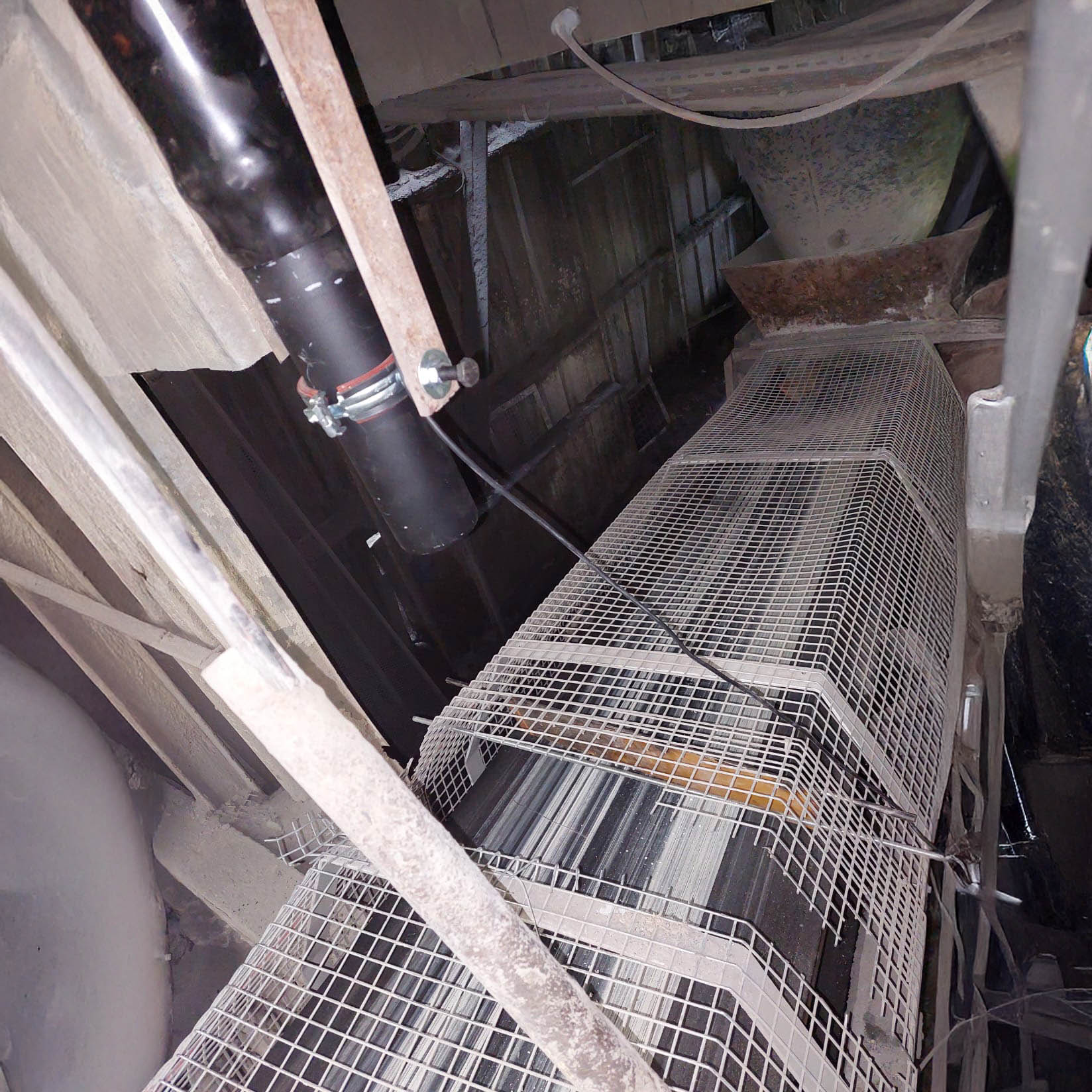
Non-contact infrared measurement: an approach focused on optimising process performance
POLARMOIST™ probe is an infrared device that takes 2 to 3 measurements per second without contact. It is a non-contact optical sensor designed to measure the moisture content of aggregates in the concrete industry.
The non-contact probe has the following advantages:
- No mechanical wear, as it has no contact with the materials.
- Annual preventive maintenance is only recommended and calibration is much less frequent than with conventional contact probes.
Technical criteria that really set probes apart
Accuracy and resolution
POLARMOIST™ has an accuracy of ±0.3% with a homogeneous sample and a resolution estimated at 0.01%.
Contact probes, on the other hand, have an accuracy of ±0.5 to 1.5% depending on the installation, with a resolution often greater than > 0.1%.
Production drift is a key issue for a quality-focused team: more stable measurement reduces manual corrections and minimises waste variations.
POLARMOIST™ is an ideal solution for situations where different materials coexist within the same process due to its infrared technology: “non-contact”. Contact probes have certain limitations.
Response time: continuous measurement vs. delayed measurement
POLARMOIST™ measurement is instantaneous and continuous.
Unlike conventional contact probes, there may be delays in measurements.
The more regularly the plant operates, the more crucial continuous measurement becomes for automation.
Distance and installation constraints
POLARMOIST™ can measure at a distance of 0.6 to 1.6 m.
Contact probes require permanent contact with the material, which increases mechanical and installation constraints.
Usable measurement range and area in the cycle
Measurement range on the POLARMOIST™ controller is set at the start and end of the dosing process, with the option of taking into account the moisture content over part of the dosing process. This can be taken into account from 5% to 80% of the dosing process.
Unlike contact probes, there are few possibilities for modifying the measurement area.
Fouling, dust, abrasiveness
POLARMOIST™ has the advantage of low fouling thanks to lens protection provided by low air emission during dosing. The measurement data obtained remains highly reliable even in polluted or abrasive environments.
Maintenance and calibration: frequency, skills, downtime
Maintenance of POLARMOIST™ is competitive. In fact, verification is recommended once a year, calibration is simple thanks to the software interface, and calibration is performed once a year.
In contrast, contact probes require regular maintenance depending on working conditions, and daily or weekly calibration is strongly recommended.
When it comes to maintenance, the determining factor is often the cost of downtime: the best probe is the one that avoids unplanned interruptions.
Data, connectivity, automation integration
POLARMOIST™ has RJ45 Ethernet connectivity for the software and a 4–20 mA analogue output; alternatives (0–20 mA, 0–10 V, 2–10 V) are also available.
Direct compatibility with PCs, PLCs, SCADA systems and concrete plants is possible, making it easier to adapt to automation and centralised management.
This is custom heading element
Ultimately, the overall cost outweighs the purchase cost of the probe and the peace of mind over the life of the probe.
- POLARMOIST™ has a low long-term cost due to the absence of maintenance, no loss of time or operator involvement for calibration, and consistent batches (reduction in non-conformities).
- High long-term cost for contact probes, linked to the replacement of contact parts and the risk of batch errors when calibration deteriorates.
POLARMOIST™ has the advantage of providing fast, uninterrupted measurement for increased productivity, whereas measurement is slower and maintenance can reduce productivity with conventional contact probes.
A decision-making method that may be useful to you is to calculate:
- Planned/unplanned downtime,
- Cost of wear parts,
- Calibration time,
- Cost of scrap/non-conformities, then compare over 12 to 36 months.
POLARMOIST™ focus: technical benchmarks to check on site
Qualities of POLARMOIST™ are:
- Technology: LED/infrared, non-contact optical sensor,
- Power supply: 24 V,
- Range: 0 to 16% (fine and coarse aggregates),
- Distance : 0,6 to 1,6 m,
- Accuracy/resolution: 0.3% and 0.01%,
- Outputs: RJ45 Ethernet + 4–20 mA (and alternatives),
- Options mentioned: temperature sensor, Ethernet switch, calibration service.
Advantages to consider: 2 to 3 measurements per second and annual calibration.
Field validation can be organised around three simple tests:
- Stability test (repeatability) on the same material,
- Dust sensitivity test (real conditions),
Integration test (PLC/SCADA & signal consistency).
Quick checklist
Measurement
- Technology: contact / non-contact infrared
- Expected accuracy and resolution (with sampling conditions)
- Response time: continuous/non-continuous
Installation
- Available measurement distance
- Possible positioning (hopper, chute, belt, mixer outlet)
- Resistance to abrasion and dust
Maintenance
- Cleaning: frequency and accessibility
- Calibration: method and frequency
Automation and data
- Outputs (4–20 mA, Ethernet RJ45, etc.)
- PC/PLC/SCADA/power station compatibility
Economy
- Wear parts (presence/absence)
- Associated downtime (maintenance/calibration)
- Impact on non-compliance and consistency of waste
Does a non-contact probe also measure coarse aggregates?
POLARMOIST™ is compatible with both coarse and fine aggregates.
How often should calibration be performed?
Calibration is required once a year for POLARMOIST™ and daily for conventional contact probes.
Which outputs are preferred for an automated concrete plant?
RJ45 Ethernet and 4–20 mA outputs, with analogue alternatives, are preferred, and PC/PLC/SCADA/plant compatibility is guaranteed.